Customer Login
If you are already registered, please log in.
Articles
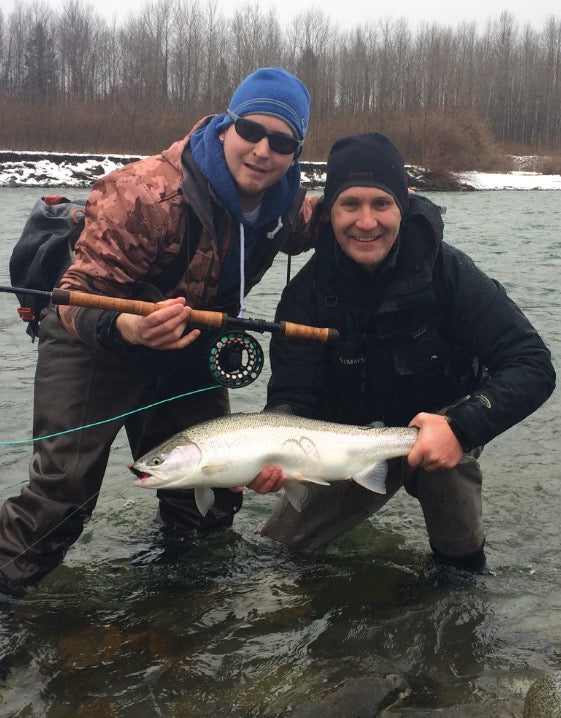

Want to really up your lake fishing game, especially in the first part of the season? Getting your chironomid fishing skills dialled in will help increase your angling success.

Chironomids can make up a large part of a trout’s diet (25%-50%) so matching the hatch and using what they are eating the most of would be a smart move towards improving your productivity while out on the lake. Monitor water temperatures closely, as they play a key role in triggering hatches. Small chironomids usually begin to emerge when water temperatures rise to the high 40s or low 50s. As the water continues to warm, the bigger bugs start to hatch. If you're fishing early season be prepared to tie on chironomids as small as size 20.

There are a couple ways to approach fishing this insect. The depth of the water can be a determining factor on the style of fishing you use. In this blog post we will look at the floating line and sinking line methods for fishing chironomids. First, we’ll cover some of the equipment basics.


The ideal fly rods for this style of fishing are 10 feet long and designed for 4-6 weight lines. Suggested rods:

Reels should be sized to match the rod and loaded with the appropriate amount of backing.


As far as fly selection goes, some chironomids are good, but more is better. Chironomids come in a wide variety of sizes (#8-#22) and colours. Here are some of the most common ones you’ll want to have in your fly box: black, brown, bright green, endless shades of olives, maroon, red and chrome/silver colours.
It's remarkable how fish can fixate on a specific colour, size, or profile of chironomid, only to switch preferences in an instant, as if flipping a light switch. This unpredictability highlights the value of another essential tool: a throat pump paired with glass vials.

A throat pump can be used to extract the most recently eaten insects from the fish without causing harm. Once a sample has been extracted you squirt the contents into a glass vial for a quick inspection and then hopefully match the hatch.
Now, obviously to get this sample one must first catch a fish. So, which fly to start with? While the array of colours is extensive, there are some pretty standard colours that you can start with. Black or chrome/silver would be good ones to tie on first to try and give a fish a little sample.
Anchors are another important piece to the chironomid fishing puzzle. When anchoring your boat, no matter what type of boat it is, you'll want to keep it stationary, so double anchors are commonplace.

Another important piece of equipment is a depth sounder. Knowing how deep the water is, is imperative to properly fish chironomids. We want to set up our gear a foot or two feet off the bottom and this is a challenge when the depth is unknown. Your depth sounder should also display the temperature, another important piece of the puzzle.

Fishing chironomids with a floating fly line and indicator is one of the most popular and effective ways to fish for trout. First off, let us look at the full equipment set up.
 |
 |
 |
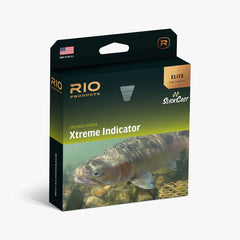
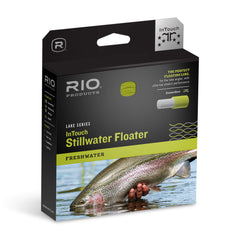
There are some options for fly lines that are specific to fishing chironomids, such as the RIO Elite Extreme Indicator Fly Line, RIO InTouch Stillwater Floating Fly Line and Scientific Anglers Andro Stillwater Indicator Fly Line. Other fly lines can definitely be used but these ones are designed specifically to help make casting with strike indicators easier.
Strike indicators are basically a small float for fly fishing. They are very popular when fishing chironomids as they allow an angler to hang his fly at a specific depth and allows one to see even the softest of bites.
There are many styles of indicators on the market for this type of fishing. The quick-release style indicators are the most popular. The indicator is attached by running the leader line through a hollow peg that runs through the indicator. Once the line has run through, the peg is pulled out and a loop of leader line gets placed inside the indicator and the peg is returned. By doing this, the loop pulls out and the indicator slides down the leader line when a fish strikes.
This set-up has a huge advantage when fishing deeper water as leader lengths can sometimes be quite long. Indicators are available in many sizes, but we recommend a decent sized one as it makes it easier to see, especially if there is a bit of a chop on the water.
Indicators come in several colours such as red, orange, pink, green and yellow. Indicator colour is a personal preference and really boils down to which colour is most visible to your eye. Everyone is different and there is no right or wrong choice.
There are many ways to attack your leader set-up and they can all work. Here’s our favourite way to set up this rig. It’s commonplace to set your gear up to fish a foot or two off the bottom when chironomid fishing. There can be exceptions to this, but this range is most common.
Let’s say we’re fishing in 16 feet of water. Start by cutting a 1.5-foot piece of 20lb Seaguar Blue Label Fluorocarbon Leader Material. Tie a loop knot at one end and attach it to the loop on your fly line. Next, take a 10-foot piece of 10lb Seaguar Blue Label and connect it to the leader using a double surgeon’s knot. Attach a small swivel Maruto Diamond Eye swivel to the end of this setup, then add a final 4-foot section of 5x or 4x fluorocarbon tippet such as Seaguar Grand Max Fluorocarbon, Frog Hair Fluorocarbon or RIO Fluoroflex before tying on your chironomid with a non-slip loop knot.

Here is the method to the madness in this leader set-up. The straight fluorocarbon is thinner in diameter than a tapered leader, thus letting it cut through the water column faster and getting your fly to the desired depth faster. The small swivel helps add a bit more weight.
 |
 |
|
Some anglers fish the floating line method without an indicator. This is known as fishing “naked”. This can also be a productive way to fish so don’t be afraid to give it a try but please keep your clothes on!
These are some recommended fly lines for fishing naked:
Chironomids are not a fast-travelling insect by any means. They rise up from the bottom of the lake and hatch into an adult at a very slow pace. Sometimes the best way to mimic the action of a chironomid is to just let your fly sit there motionlessly suspended in the water. Your leader should be 25% longer than the depth you are fishing when using the naked line method.
When fishing a floating line, make your cast and then keep nice and tight to the line. By this we mean avoid having slack in your line and let it sit.
Some days retrieving the fly with little bumps can be the ticket. Having your fly move a bit in amongst all the real flies can be enough to grab a fish’s attention and have it bite your fly.
Another tried, tested and proven method is a slow steady retrieve.
Don’t hesitate to try different methods during the day as switching it up can help you increase your odds of hook-ups.
Some days they want it moving and some days they don't. You'll need to experiment to see how they want it.

Once we get into water depths of over 25’, the sinking line method of chironomid fishing should be considered. It becomes a challenge to cast the long leaders needed to fish at these depths using the floating line method. Instead, you should switch to a full sinking fly line without an indicator.
To set up a sinking line leader, start with a 1.5-foot butt section of 20lb Seaguar Blue Label Fluorocarbon, connecting it to a 2-foot section of 10lb fluorocarbon using a double surgeon’s knot. Attach a small Maruto Diamond Eye swivel to the other end of the 10lb section. Next, add a 2-foot piece of 5x or 4x tippet. Finally, tie on your chironomid using a non-slip loop knot.
A good way to approach the sinking line method is to first anchor your boat and attach a weight to the end of your leader, strip out line and then lower the weight to the bottom of the lake. Reel in the excess line and strip the weight back to the surface. Remove the weight and replace it with your fly and then cast your line out.
Allow the line to sink vertically below you and then bring it up a foot or two and the rod can either be placed in a rod holder or held onto awaiting a bite.
When fishing chironomids on a sinking line, you have two primary techniques to choose from: fishing it statically or slowly stripping it to cover more of the water column. If you’re fishing solo from a boat, you can use two rods, place one in the rod holder while actively stripping the other. The secret to effectively stripping a chironomid lies in your pace: slow, slower, and when you think you’re going slow enough, slow down even more. Patience is key!
The primetime for chironomid fishing is usually shortly after the lake turns over and cleans up. This timing can be affected by the weather as an early or warmer spring will shorten the window for most lakes. There are some exceptions to this rule as well. Some lakes have a fishery for bomber chironomids (big chironomids that are size 10 to 12) in the Summer months and some lakes also have a Fall chironomid fishery. However, Spring is the most common time for the best fishing.
The nice thing about chironomid fishing is that it’s not usually a first thing in the morning fishery so being up in the dark to be out on the lake isn’t really necessary. There can be exceptions to this but usually most of your hatches are going to be from later morning 10am to the afternoon to 3:00pm or 4:00pm.
This is something we hear sometimes and yes, if you anchor up in a spot all day and sit there with no bites it’s not exactly going to be exhilarating. There are days where the bite’s just not on. Unsettled weather and cooler temps can all lead to slower days on the water.
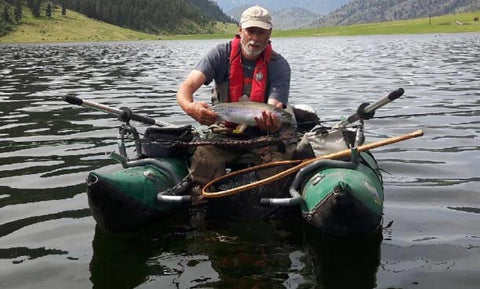
To be successful at chironomid fishing you still must “fish”. This means we don’t stay in the same spot all day. If it’s not happening in an area, move. Sometimes it doesn’t take much of a move to be on the fish so try casting to different areas around your boat, moving the fly instead of letting it sit or changing flies. Be active and find the fish.

When you get chironomid fishing dialled in, it can truly be a fish every cast. Those days are far from boring, so give chironomid fishing a try this spring. It can be highly productive and a lot of fun.
If you have any questions, please give us a call at 604-931-5044 or send us an email at searun2013@gmail.com or stop by the shop #110-1140 Austin Ave in Coquitlam, BC.
Good luck on the water.
Follow and Like Us
Like us on Facebook: https://www.facebook.com/searun
Follow us on Instagram: http://instagram.com/searunflyandtackle
Email us: searun2013@gmail.com
Customer Login
If you are already registered, please log in.


0 comments